
No greater love … Dr. James Gordon DeVane
No greater love … Dr. James Gordon DeVane
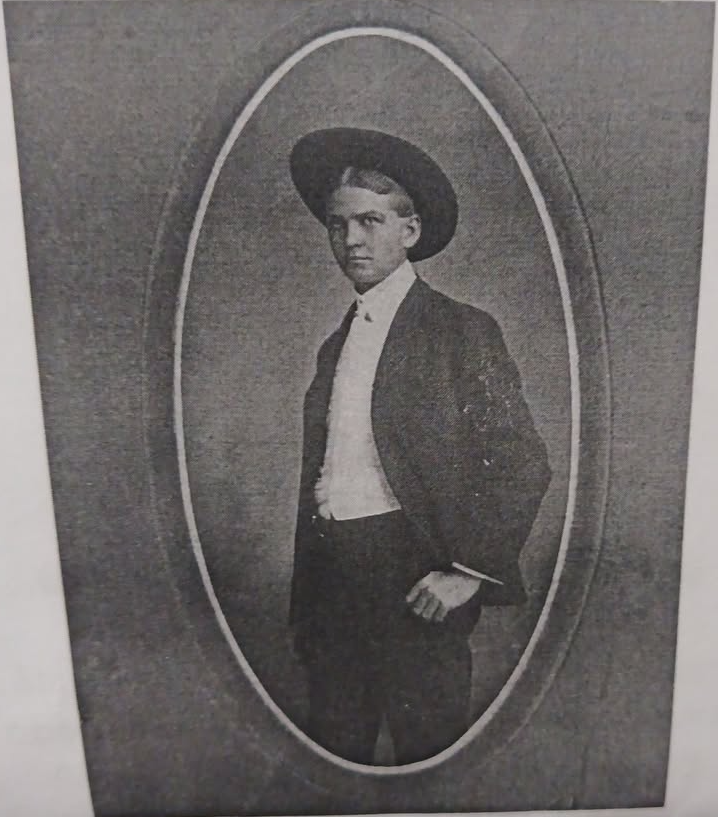
Dr. James Gordon DeVane. Source: Cook County Historical Society.
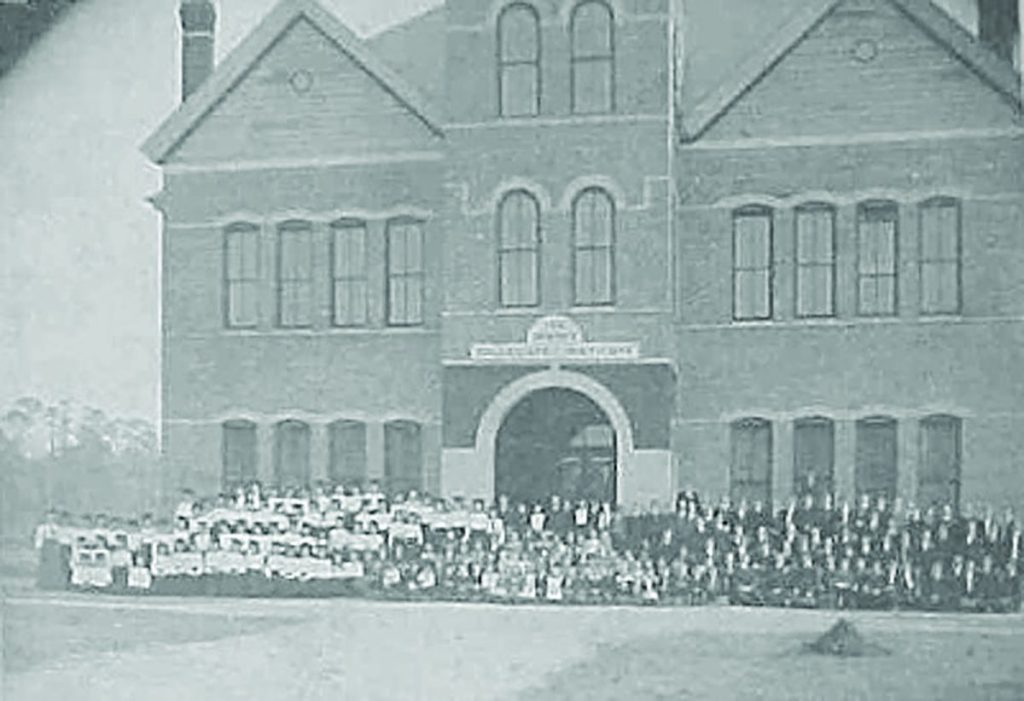
Sparks Collegiate Institute in better days, circa 1904.
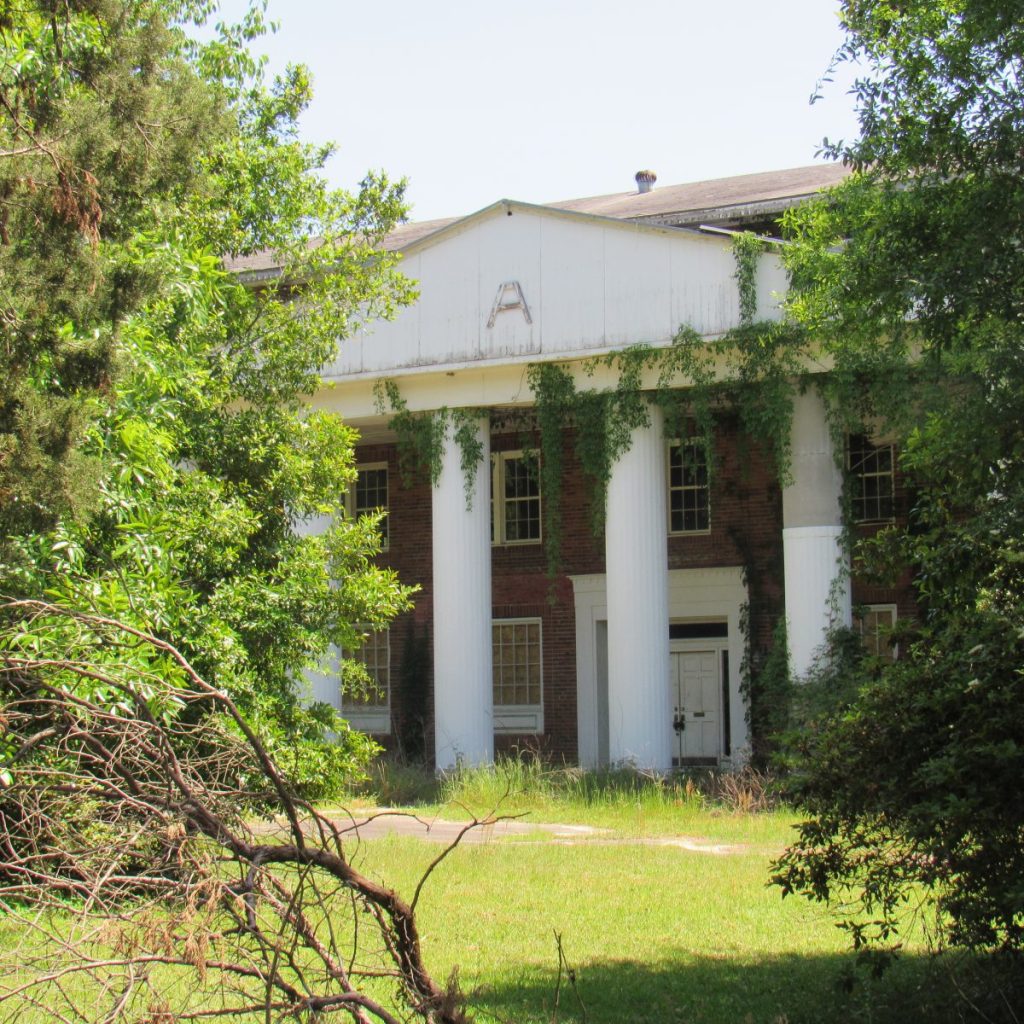
Ruins of the Sparks Collegiate Institute, established by the South Georgia Methodist Conference and the citizens of Sparks, Ga., in 1902. Dr. James Gordon DeVane, this story’s hero, earned his undergraduate degree there.
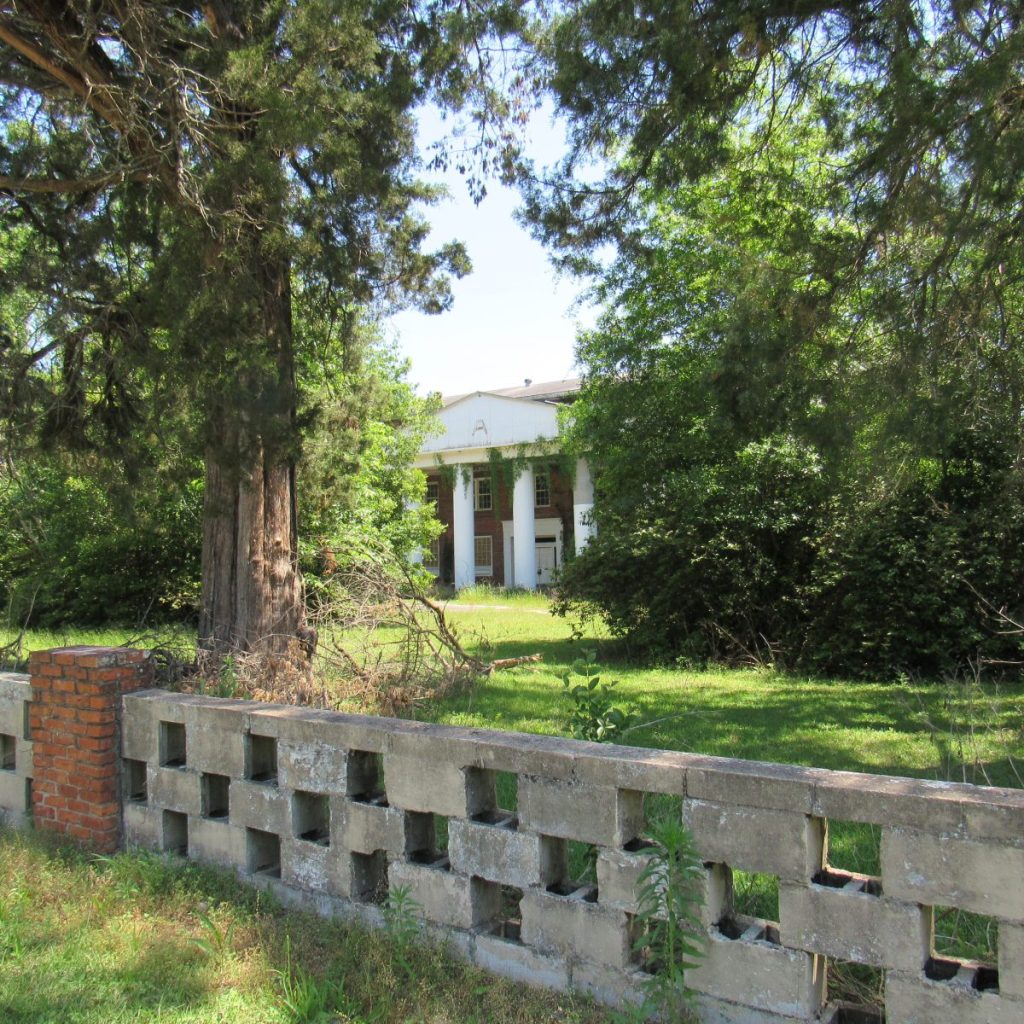
It follows that College Street in Sparks, Ga., was named for the Sparks Collegiate Institute.
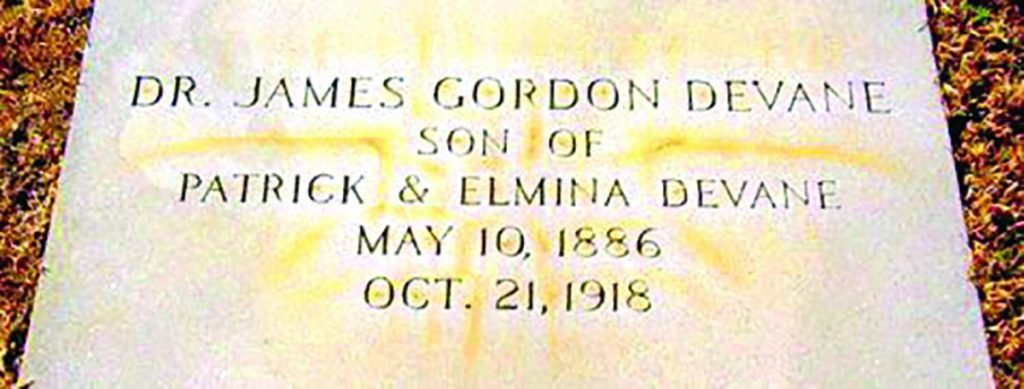
The grave of Dr. James Gordon DeVane, Pleasant Cemetery, Berrien County.
By Charles Shiver
A young local doctor named James Gordon DeVane was pitted against the overwhelming horror of the Spanish flu pandemic, which reached its peak during fall 1918 in this community.
Kissed by a scorpion, and on to war
According to the Ray City History Blog, Dr. DeVane might have been inspired to study medicine by “the kiss” of a red scorpion, or “Southern Devil,” in the Connell’s Mill district of Berrien County.
A news brief reprinted from the Tifton Gazette, Sept. 27, 1907, Page 7: “While at Pleasant church Sunday Mr. Gordon DeVane was bitten on the lip by a red scorpion. His lip swelled considerably and he had to seek medical attention. Mr. DeVane was tying his horse to a tree when attacked by the scorpion. – Adel News.”
Born May 10, 1886, James Gordon DeVane was a son of the former Mary Elmina Morris (1866-1918) and James Patrick DeVane, a farmer (1863-1945). (I have also seen his mother’s middle name spelled as “Elminia.”) Their home was on the “Cecil-Milltown Road.” According to the Directory of Deceased American Physicians, 1804-1929, James Gordon DeVane was educated at the Sparks, Ga., Collegiate Institute before attending the Atlanta School of Medicine.
According to the Ray City History Blog:
“Gordon DeVane graduated from the medical school in 1911 and was subsequently licensed to practice medicine in Georgia and Florida. But at the time of the Census of 1910, Gordon DeVane had returned to Connell’s Mill District where he was enumerated in the household of his parents, Patrick and Elmina DeVane. Perhaps in anticipation of his graduation, he gave his profession as ‘physician’ and his occupation as ‘general practice.’
“In 1911, Gordon DeVane married Lottie Bell Patilla or Patills, of Atlanta, and for a while the couple made their home in Winter Garden, Fla., where Dr. DeVane engaged in general practice. But about 1914, Dr. DeVane moved back to Berrien County to practice medicine in Nashville and Adel, Ga. [I have also seen his wife’s first name spelled as “Lollibell.”]
“When James Gordon DeVane registered for the draft for World War I in 1918, he gave his permanent home address as Adel, Berrien County, Ga. He was 32 years old, medium height and build, with blue eyes and brown hair.”
Dr. DeVane’s registration card noted: “Has been commissioned and accepted as First Lieutenant, Medical Reserve Corps.”
The war ended before Dr. DeVane was deployed to Europe; however, back home, he ended up fighting an even deadlier, more insidious enemy than the German hordes… The Spanish flu.
A young doctor’s sacrifice
“Greater love hath no man than this, that a man lay down his life for his friends.” – John 15:13
A better name for the hellish disease from which local physicians worked tirelessly to save their patients a century ago may be “The Blue Death.”
The Spanish flu’s worst month in the U.S. was October 1918, when nearly 200,000 Americans died from the virus. October 1918 was also the month the flu epidemic hit Georgia. The Blue Death far overshadowed our recent COVID-19 experience in terms of lives lost; the lack of any form of vaccination, or effective traditional treatment for many sufferers; and the sheer terror that it sparked in our area and worldwide.
An article in John Hopkins Public Health web magazine calls the hospitals where the Spanish flu was treated as “a nightmare of rasping blue death. … Many patients had the deadly hue of cyanosis, a blue so deep that many observers misjudged this for the return of ‘black death.’ ” … However, as the disease progressed and pneumonia set in, they began to bleed profusely – from the nose, the ears, and the mouth.”
According to ExploreSouthernHistory.com, children across the South wore masks to protect themselves as they continued to attend school. Telephone operators also wore masks, but so many fell ill that some Southern phone companies had to limit calls to emergencies only. The City of Atlanta banned public gatherings, while “in Quitman, public officials went so far as to ban church services.”
“The same papers that carried news of the October 1918 sinking of the HMS Otranto also reported the flu epidemic at home,” according to the Ray City History Blog.
Dr. James Gordon DeVane responded selflessly to the epidemic as the disease spread rapidly through what was becoming Cook County.
The Adel News – Centennial Edition (April 22, 1973) states:
“When Adel was hit by the ‘flu’ epidemic in [October] 1918, [Dr. DeVane] administered to and cared for his stricken patients – entire families in some cases. Nearing collapse, he brought prescriptions in to the drug store for his patients and went home for his first night’s rest in several days. Within 24 hours, the young doctor died – a victim of the terrible epidemic.”
I wonder if the Spanish flu killed Dr. DeVane’s mother as well because she died on Nov. 6, 1918, at the age of 52. She is also buried in Pleasant Cemetery in Berrien County.
Dr. and Mrs. DeVane had two children, Mrs. Margaret (Jack) Parrish and James G. DeVane.
I haven’t done genealogical research on Dr. DeVane, but his descendants should be thanked for the ultimate sacrifice he made for his community. Who knows how many patients might have survived as a result of his aid and carried on their family lines to benefit Adel and Cook County?