
The Legend of Lo-Eyes, Part 2: War Is Kind
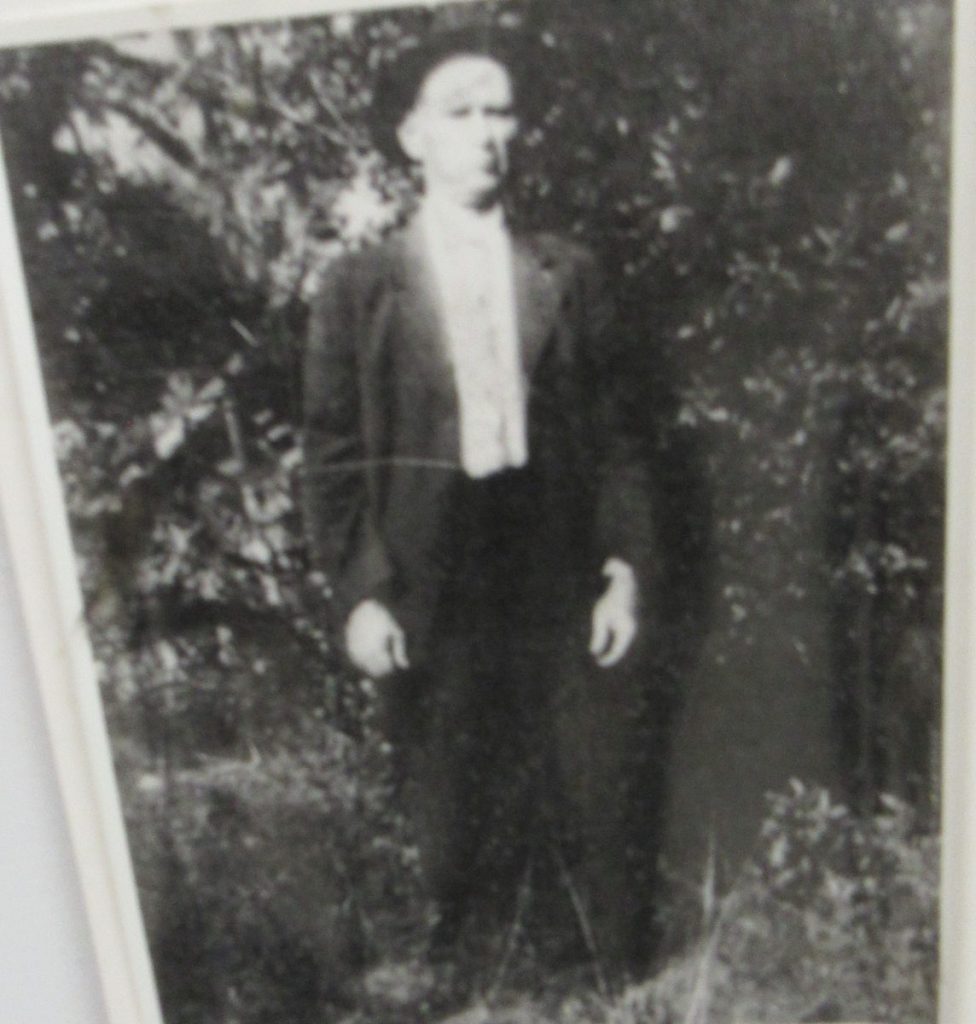
Malcolm D. Davis, born 1866, grandson of Indian girl left behind after the 1836 area Brushy Creek Indian Battle.
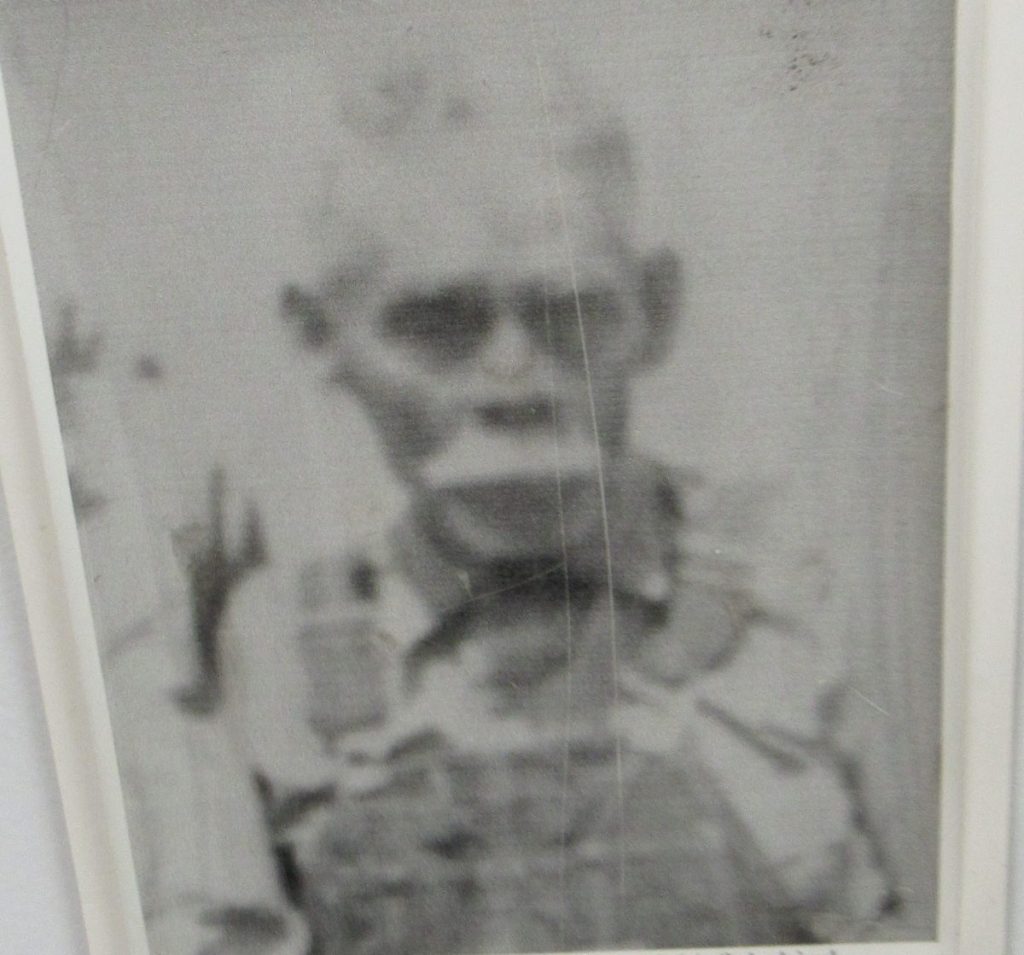
Henry S. Davis, grandson of the Indian girl left behind after the 1836 Battle of Brushy Creek.
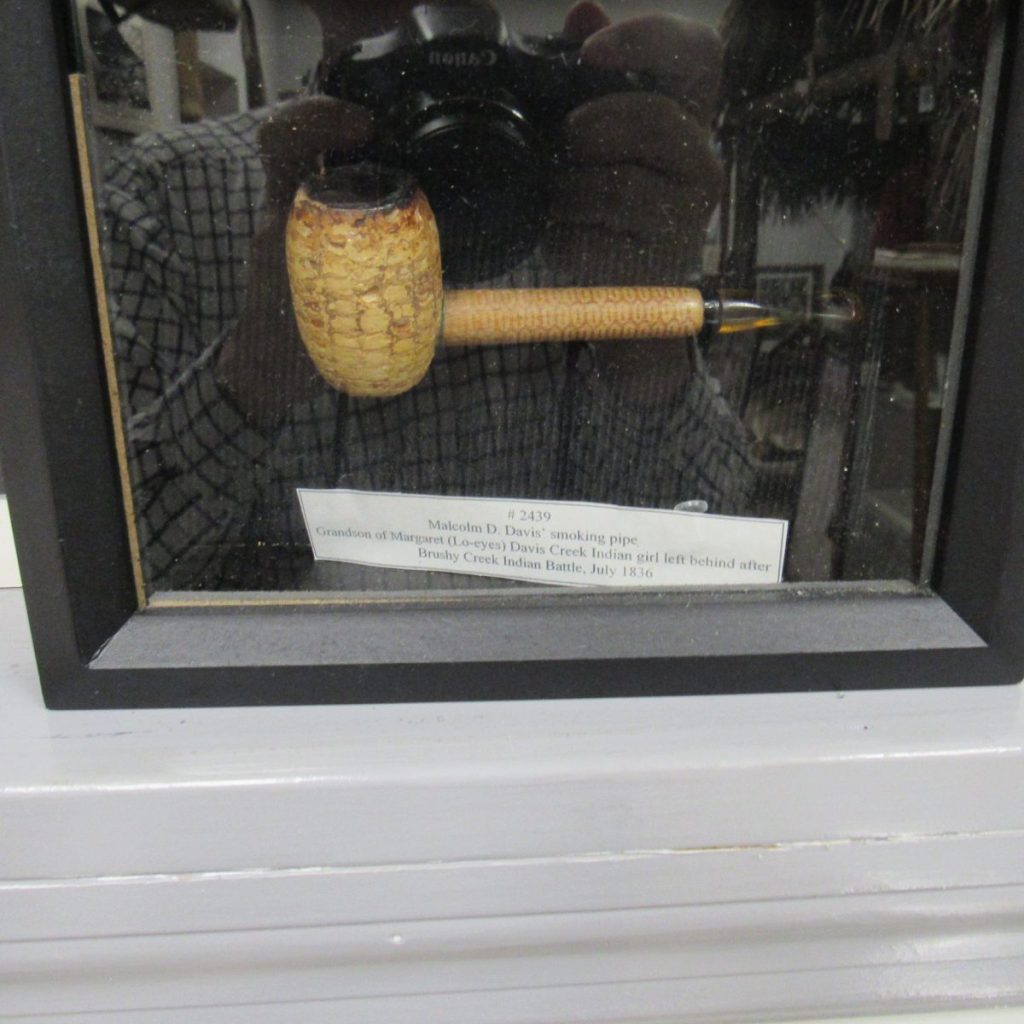
The smoking pipe of Malcolm D. Davis, on display at the Colquitt County Museum of History. Davis was grandson of Lo-Eyes, the Indian girl left behind after the Battle of Brushy Creek.
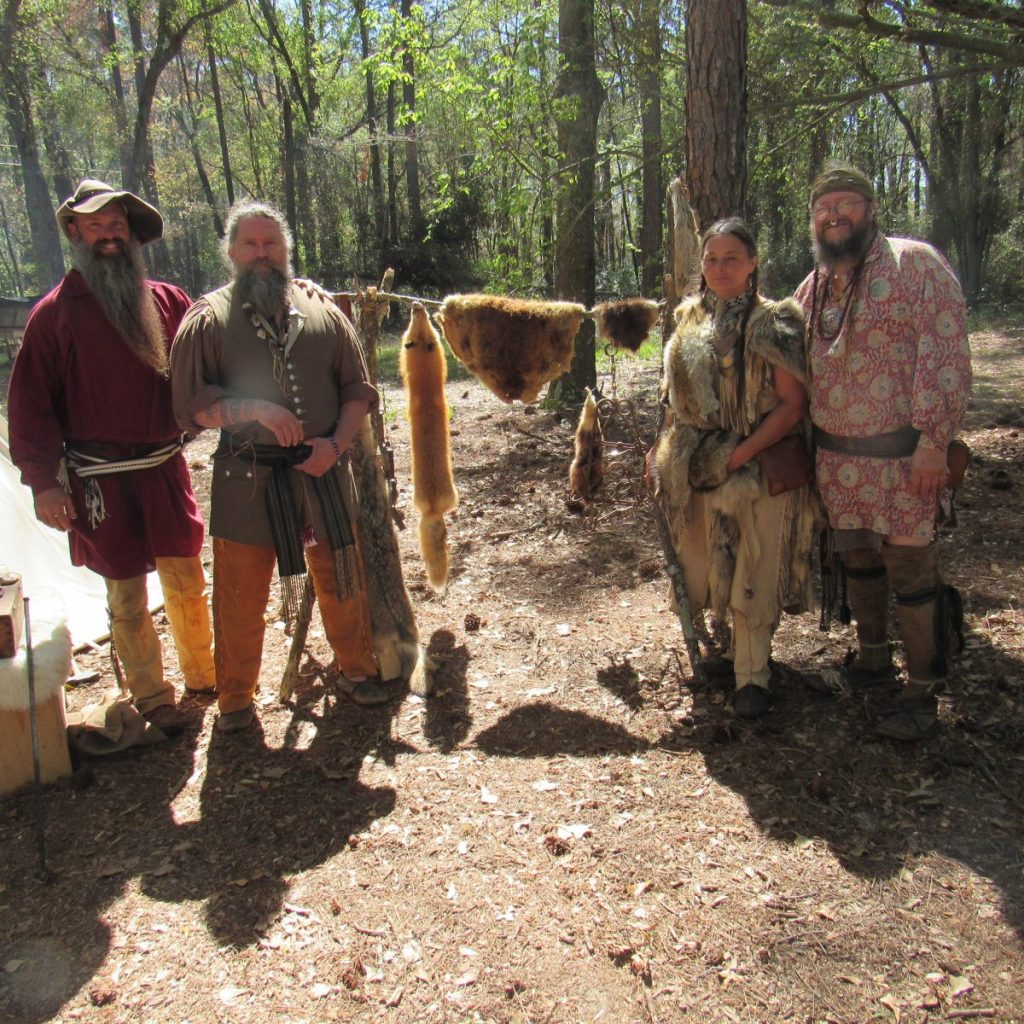
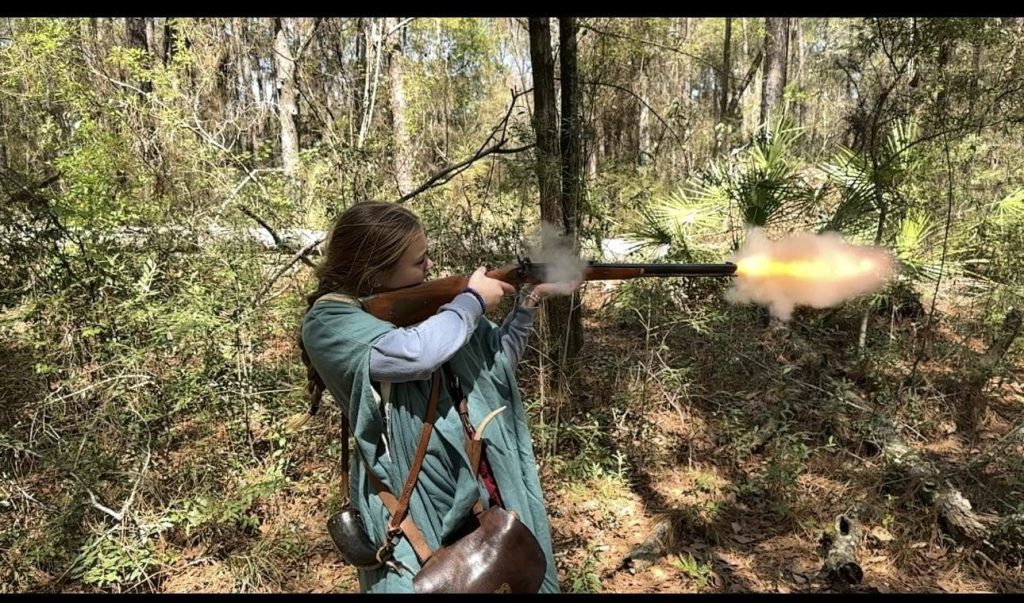
A group of reenactors at the Brushy Creek Muzzleloaders Spring Rendezvous and Shoot, held in March 2025 near Lenox.
The Legend of Lo-Eyes, Part 2: War Is Kind
By Charles Shiver
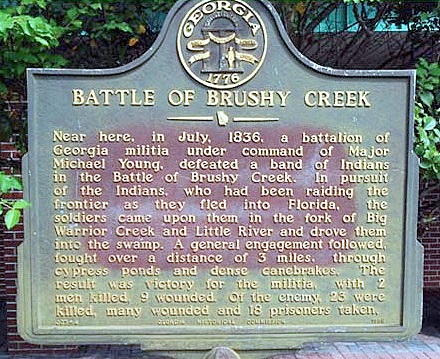
The historical marker for the Battle of Brushy Creek is located at Rest Area #5, on I-75 Northbound, approximately eight miles north of Adel. The marker reads: “BATTLE OF BRUSHY CREEK – Near here, in July, 1836, a battalion of Georgia militia under command of Major Michael Young, defeated a band of Indians in the Battle of Brushy Creek. In pursuit of the Indians, who had been raiding the frontier as they fled into Florida, the soldiers came upon them in the fork of Big Warrior Creek and Little River and drove them into the swamp. A general engagement followed, fought over a distance of 3 miles, through cypress ponds and dense canebreaks. The result was victory for the militia, with 2 men killed, 9 wounded. Of the enemy, 23 were killed, many wounded and 18 prisoners taken.” The facts and figures from the battle will vary depending upon which history you read. Call it “the fog of war,” or mist of the lost past.
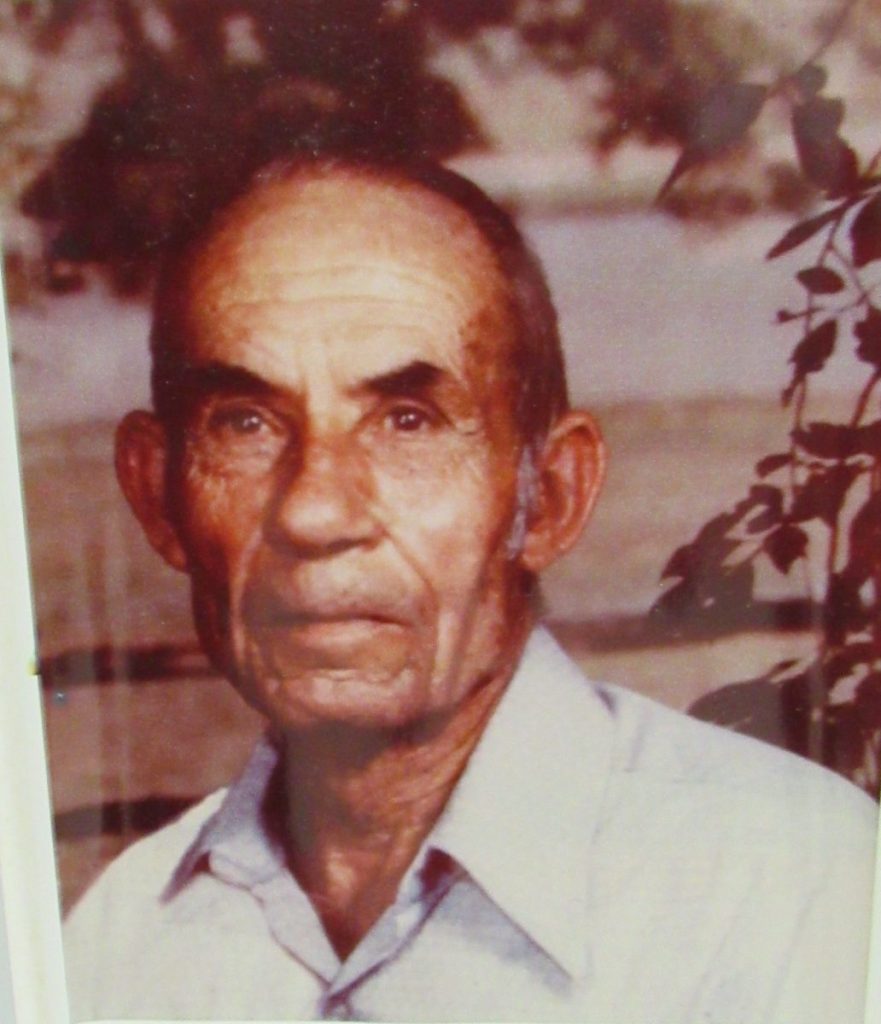
George E. Davis, great-grandson of Peggy Williams Hartley, originally called “Lo-Eyes” by her first family among the Creek Indians from Alabama.
“Do not weep, maiden, for war is kind.” – Stephen Crane
On or about July 15, 1836, the Georgia militia and armed citizens fought a battle against a band of Creek Indians in the Brushy Creek area of what is now known as Cook County, Ga.
This was total war with primitive firearms that had to be reloaded after a single gunshot (musket balls striking the enemy) and vicious hand-to-hand combat with calloused fists and bloody, grimy hatchet, tomahawk, and knife blades. Among those who died was Lowndes County Sheriff Edward M. Henderson, who was mortally wounded and passed away five days later on July 20, 1836.
Neither side, Georgia militia and volunteers vs. Native Americans, spared people of either sex or any age, armed or unarmed, for much of the battle. And, we believe 2025 to be violent times.
Some histories mention the militia pursuing and killing Indian men, women, and children indiscriminately, after the most fierce Creek warriors were routed, while others describe it as a more standard military engagement with quarter given to the beaten foe. Of course, the Indians used their own total war tactics in massacring settlers, i.e., rape and scalping. The militia saw the Indians as savages that needed to be exterminated. Who drew first blood will never be known.
Still, there were acts of compassion once what I call “the blood fever” of combat had passed.
Indian survivors of this battle were rounded up and marched to jail in Thomasville, where they were held until relocated out West.
Following one of the skirmishes, an Indian girl about 8 or 10 years old went the next day to the house of James Williams on the edge of Brooks County. Mrs. Williams was washing in the washtub when the little girl came up and put her hands in the tub. This nearly scared Mrs. Williams to death, according to the historical sources. Only the adult Creeks wore clothing in the summer, according to writer Thom. Kolesa.
The soldiers knew it was another of the Indian tricks, to send a child in and try to make them believe the Creeks were in that neighborhood. The soldiers were ordered back to Warrior Creek. Gen. Alford followed the Indians down into Florida, and some went to hide out in the Okefenokee Swamp, where the general gave them up.
The Indian battles and massacres in South Georgia continued well into the 1870s, according to the writer Kolsea. He gives accounts of the Battles of Sandy Sink and “Breakfast Branch” during the 1850s in what is now Turner County. Billy Bowlegs led some 4,000 Indians on the warpath from their headquarters in the Okefenokee Swamp and the Everglades. Meanwhile, “white guerrilla bands, masquerading as Indians, caused considerable havoc and antagonized relations between the settlers and the Seminoles,” Kolsea wrote. “Dressed as Indians, they would steal cattle and rob stages.” The worst mastermind of the Indian-impersonating gangs was John Murel, “who had as many as 1,000 men under his command at times.”
Despite the ongoing hostilities with Native Americans, Mrs. Williams kept the little Creek girl who wandered into her care, raised her, and sent her to school. The girl’s Creek name was “Lo-Eyes” or “Low Eyes,” but the Williamses named her Margaret Williams and called her “Peggy.” (Peggy was believed to have been born in Alabama.)
On Sept. 12, 1836, Col. Henry Blair wrote a letter to then-Georgia Gov. Schley and referred to the little Indian girl in a postscript:
“Sir, I have to state to you that there is one small Indian girl yet remaining in Lowndes County which was taken a prisoner by a Mr. Williams in said County. I have demanded it of him and he has refused to give it up, saying he has been at considerable trouble with it and would keep it. You will please inform me what to do in such a case.”
Gov. Schley wrote back to Col. Blair:
“As for the … Indian girl in the possession of Mr. Williams, I think there is no need to transfer the child on to Thomasville jail. I understand the child came to Mrs. Williams for bread and protection and that Mrs. Williams has become attached to it. Humanity pleas for it and as it has no other protector it would be cruel to tear it from its benefactors.”
Peggy was given the same educational advantages that the white children in the home received, and a great affection developed between the little girl and the Williams family.
At about age 16, Peggy married James Hartley, a young tenant farmer who had moved to South Georgia from South Carolina. By all accounts, they loved each other deeply and had a happy home. The Hartleys had six children with numerous descendants in this area today. James died in 1859 or 1860, when Peggy was 33 years old, leaving her to raise the children alone.
Peggy was poor but honorable, and she and her children supported themselves through working on the plantations of Mr. George Alderman, Mr. James C. Johnson, and others in the community. Peggy’s and James’ children were described in the 1850 and 1860 census records as “1/2 Creek” or “1/2 Indian.”
Mrs. Faye Bridwell and the Museum of Colquitt County History have set up a very unique display featuring Peggy Hartley’s story. One of Peggy’s children, Frances Hartley, born in 1847, married George W. Davis in 1864. Her son Malcolm D. Davis was born in 1866, and Henry S. Davis was born in 1872. Henry’s son, George E. Davis, was Peggy’s great-grandson. Ronald Davis of Berlin, Peggy’s great-great-grandson, provided family photos and family information for the Colquitt County museum display. Mrs. Bridwell provided me with copies of pages from the Davis Family’s Bible, showing the lineage. Several of Peggy’s descendants were Copeland family members.
Gail Hughes, a very active member of the Cook County Historical Society, has dressed as Peggy (Lo-Eyes) and played her for programs.
Mrs. Hughes noted that Peggy experienced much heartbreak during her life. Peggy’s son, William H. Hartley, was killed during the Battle of Boonsboro, Md., (near the Antietam National Battlefield) during the Civil War. Also, according to Folks Huxford’s handwritten notes, Peggy and her daughter Hester were indicted in 1872 for running a “lawd house” (a house of ill repute) in Brooks County. Peggy demanded a trial and was granted one in November 1872. The Quitman Free Press “only” dates back to 1876, so I have been unable to find articles about this incident and its outcome. You can’t help but think that this was most likely a miscarriage of justice, with Peggy’s morals under attack simply because of her Native American blood, reflecting the biases of that repressive time.
Sadly, no one apparently has a photograph of Peggy, and Lo-Eyes’ grave cannot be found, lost like so many other important aspects of South Georgia’s history and heritage in the vast sea of time.
The Brushy Creek Muzzleloaders do commemorate the early settlers’ days with the group’s shooting events, off of Highway 41, near Lenox.
My hope is that a mere 11 years from now, in 2036, our community will host special events to mark the 200th anniversary of the Battle of Brushy Creek, one of the pivotal incidents in South Georgia’s history.